
Codec Accounting – plain English accounting for charities, small businesses and sole traders in Ealing, West London and across London.
Every registered charity in England and Wales writes a trustees' annual report to go with its accounts. Funders, donors and the Charity Commission all read it.
A lot of reports stop at what the charity did: sessions run, meals served, grants paid etc. But a better report will also show the impact those actions have had and SORP 2026 puts more weight on that too.
Take the seven steps in order. Each one feeds the next.
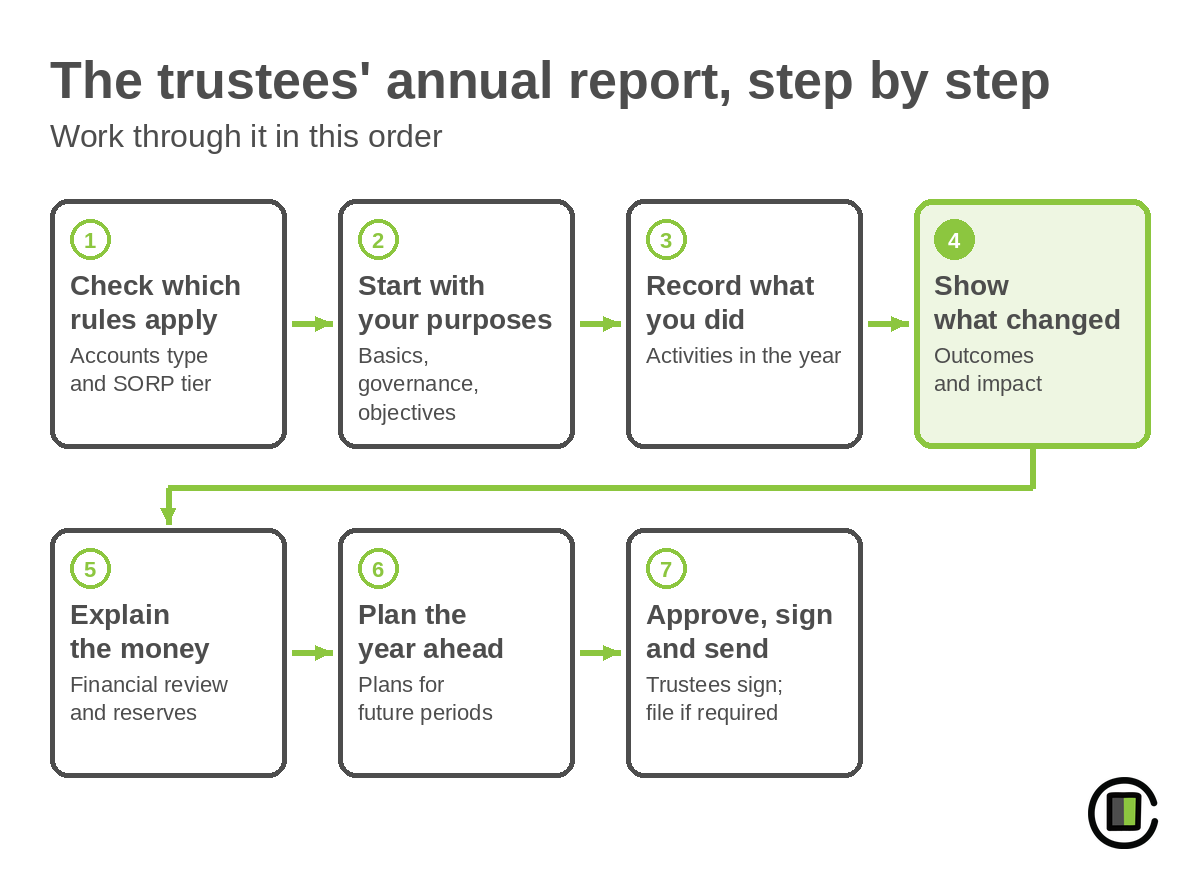
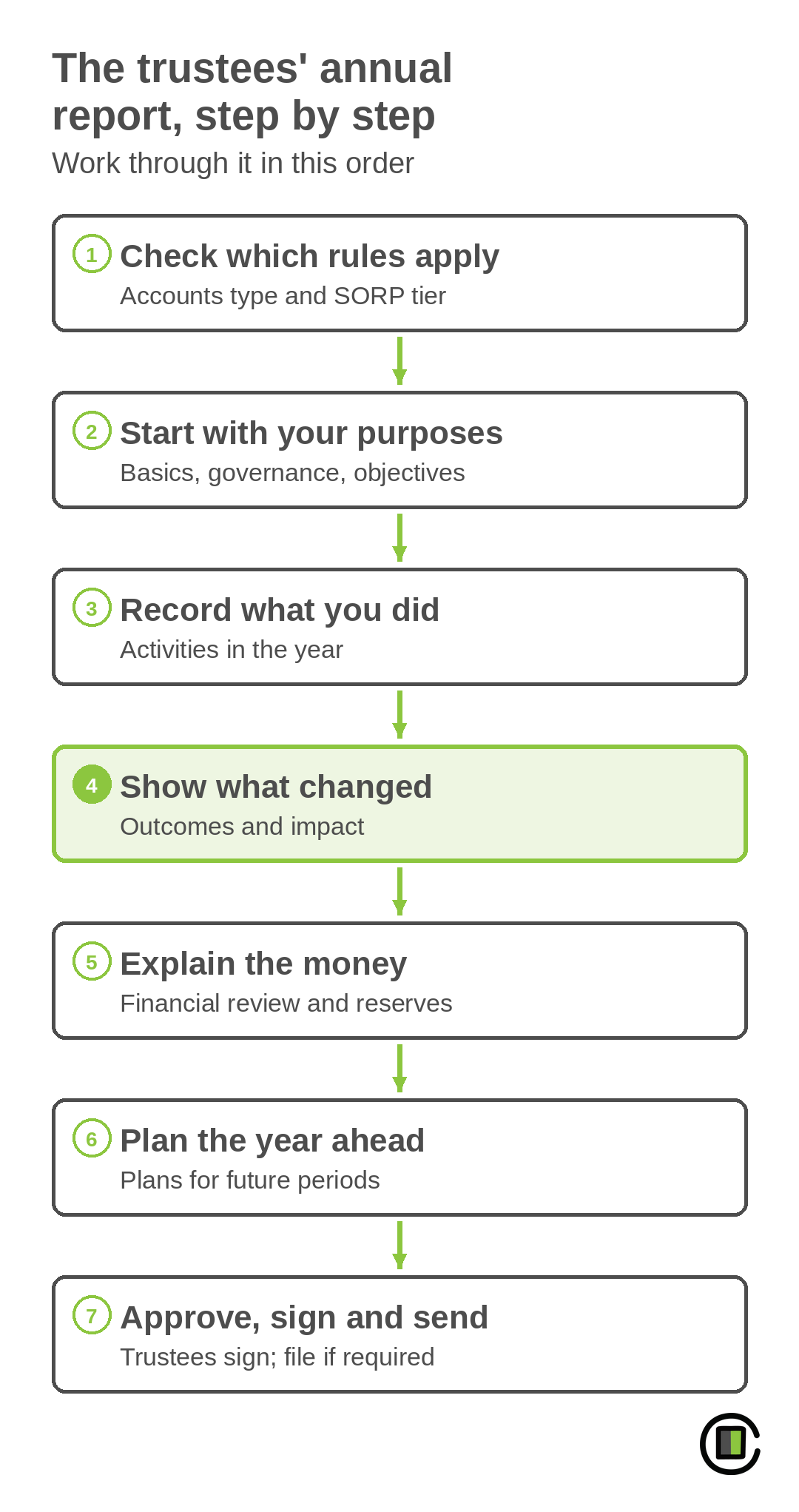
This article covers charities registered with the Charity Commission for England and Wales. Thresholds and rules change from time to time, so check the latest guidance on GOV.UK.
1. Check which rules apply
What goes in your report is dependent on the kind of accounts you are required to prepare.
Receipts and payments accounts. A simpler report is enough. Most of the steps below still apply, with less detail.
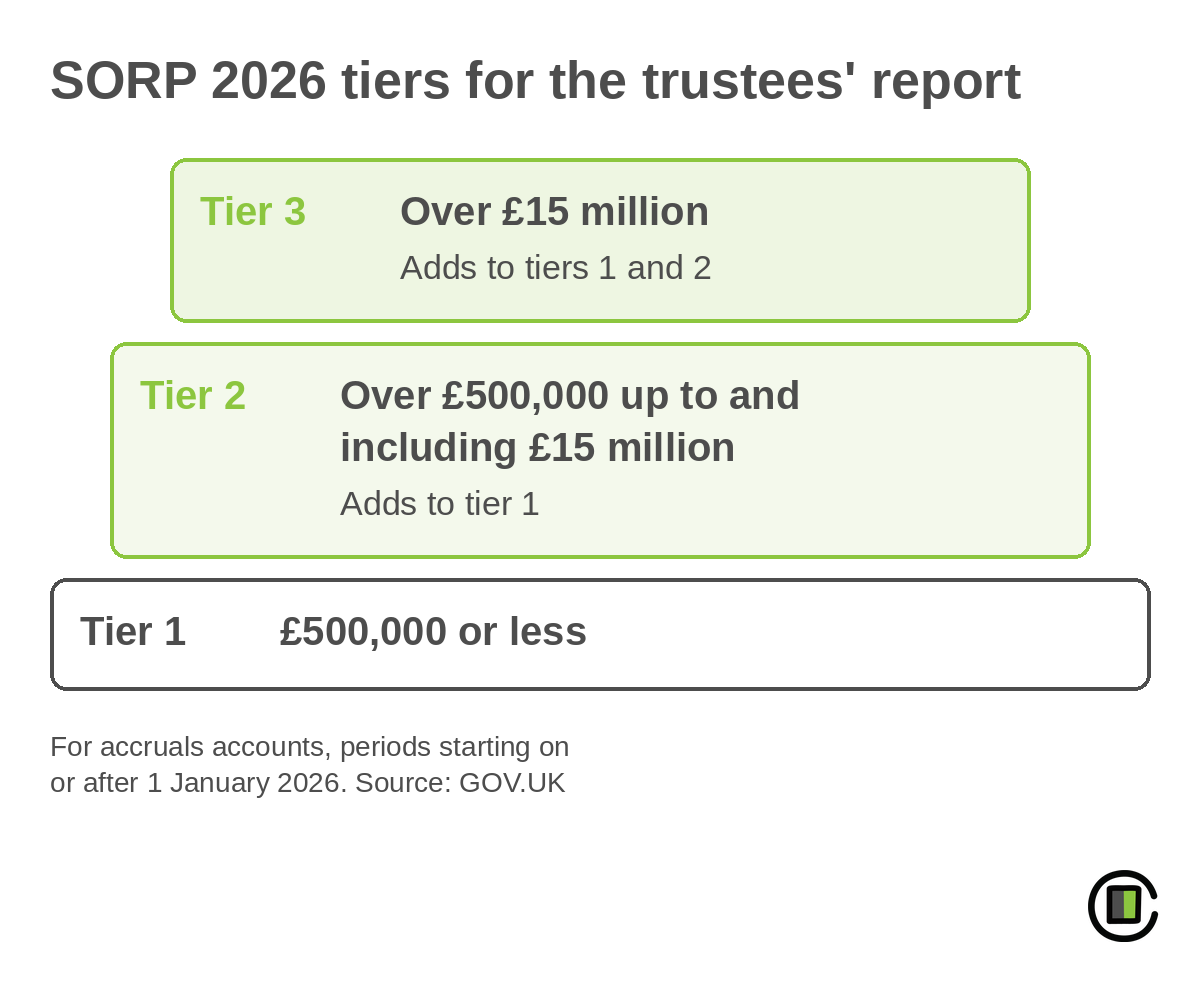
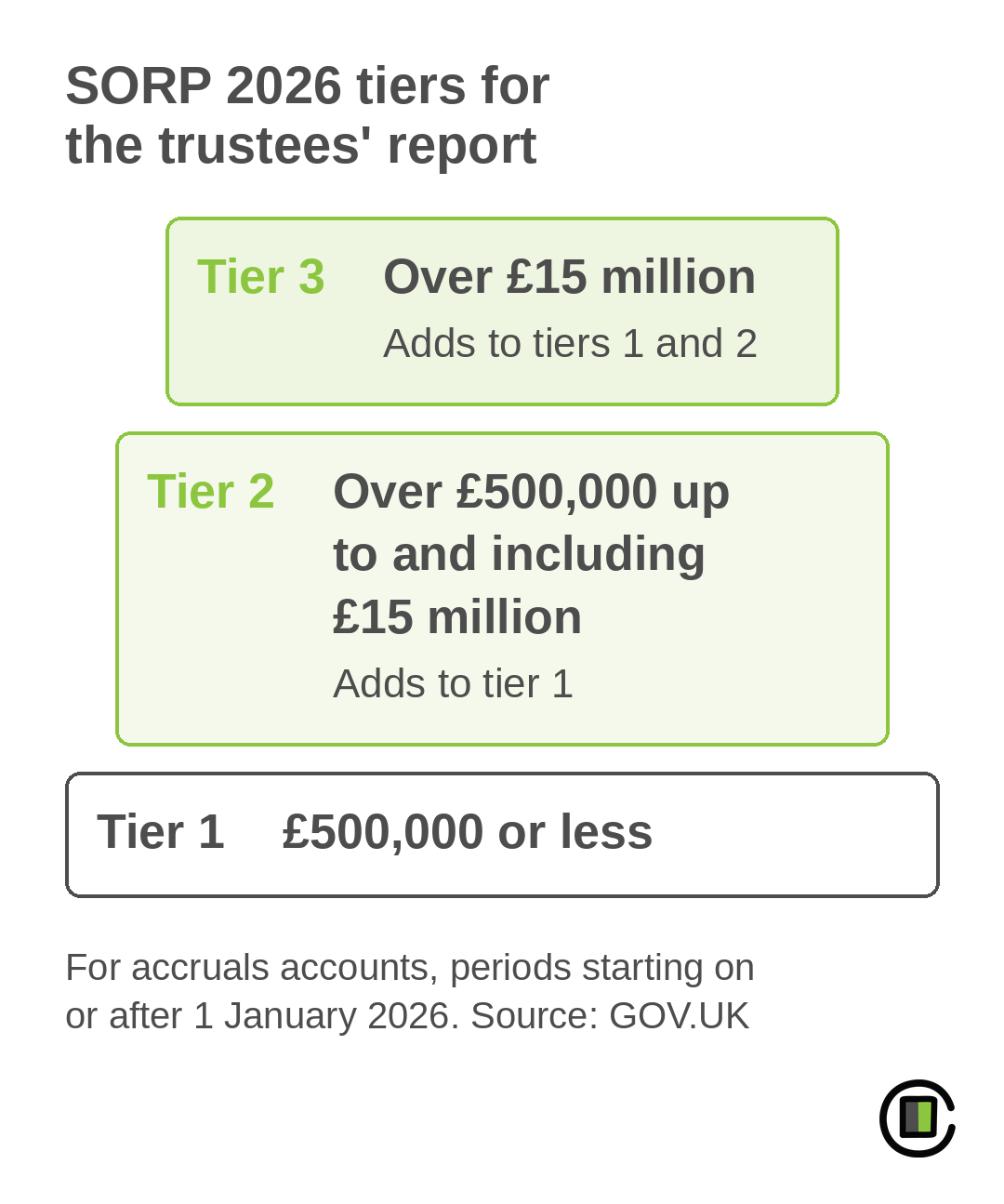
Accruals accounts. The report must follow the Charities SORP. SORP 2026 applies to reporting periods starting on or after 1 January 2026. It sorts charities into three tiers by income:
Tier 1: £500,000 or less
Tier 2: over £500,000, up to and including £15 million
Tier 3: over £15 million
Each tier meets the requirements of the tiers below it, plus its own:
Tier 2: performance against the aims set, investment performance where material investments are held, impact including the long-term effect.
Tier 3: also fundraising performance against objectives and the effect of fundraising spend, plus sustainability.
Tier 1 charities are encouraged to include some or all of the tier 2 and tier 3 content if trustees consider it particularly relevant to readers.
Not sure which accounts you should be preparing? Our guide to receipts and payments vs accruals accounts sets out the choice.
Two other things add to the report:
Audited charities also cover fundraising: your approach, any professional fundraisers, whether you follow the Code of Fundraising Practice, complaints received and how you protect vulnerable people.
Charitable companies also prepare a directors' report, which can be combined with the trustees' report. Medium and large charitable companies add a strategic report.
2. Start with your purposes
Next, put the basics down. The report covers:
Reference and administrative details. Registered name and any other names, registration number, main office address and the trustees' names.
Structure, governance and management. Your governing document and its date, and anyone entitled to appoint trustees.
Objectives. Your charitable purposes.
Then take each purpose and write one sentence on the change you want to see. That sentence is the measure for the rest of the report.
3. Record what you did
Set out your main activities in the year for the public benefit, under the purpose each one serves. Activities are what you do: workshops run, food parcels given out, helpline hours kept.
The report should also say whether trustees have had regard to the Commission's public benefit guidance. At £500,000 or less, you choose how to report on public benefit, within that minimum. Over £500,000, you give more detail, set by your SORP tier.
Headings that match your purposes help readers find each one fast.
4. Show what changed
A list of activities shows how busy you were. Now say what changed for people as a result.
Outcomes are the changes that follow for people: a family that no longer skips meals, a young person who finds work.
Impact is the longer-term difference, for individuals and for wider society.
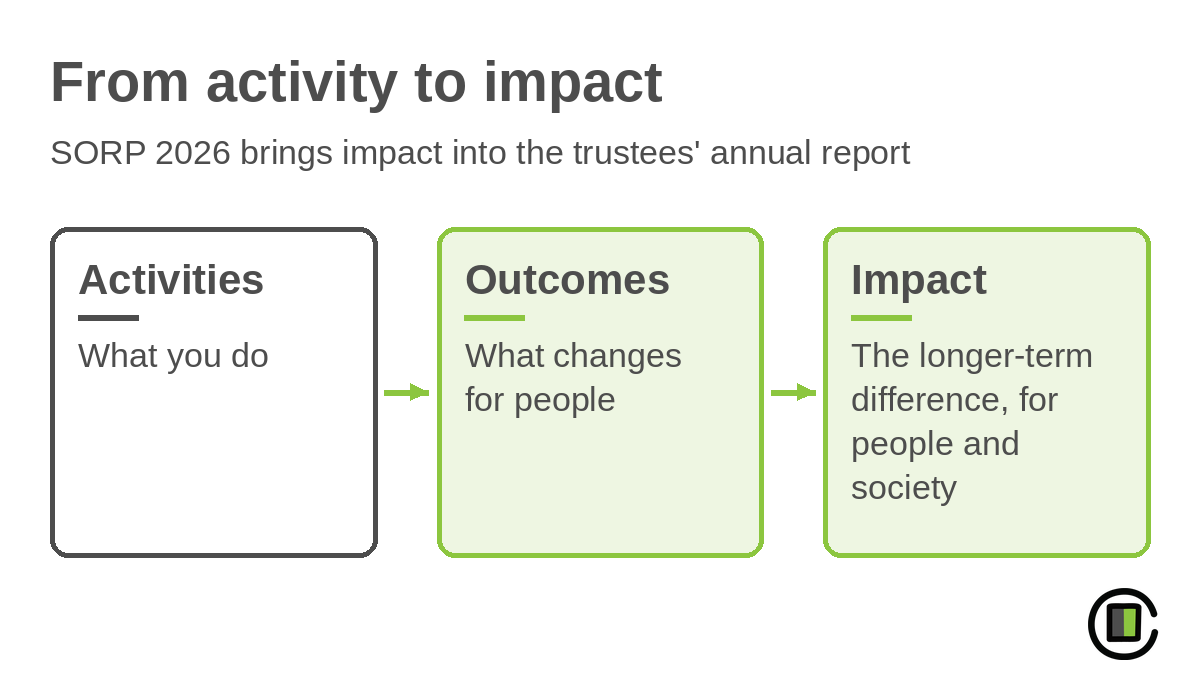
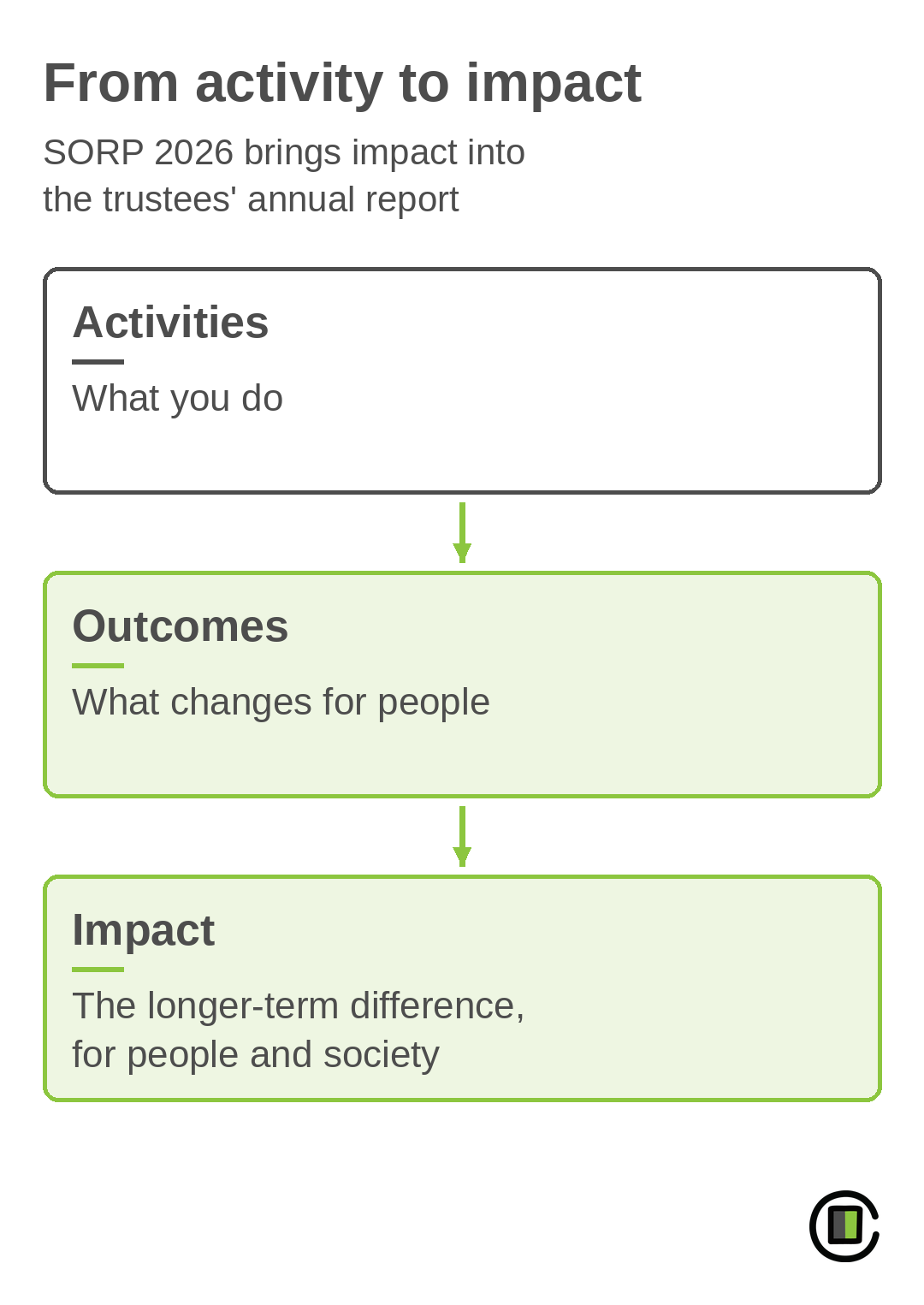
Every report summarises your main achievements, and this is where you say how your work made a difference. Under SORP 2026, tier 2 and tier 3 charities must explain their impact, including the long-term effect.
Pick two or three outcomes for each main activity, then collect evidence through the year. Short feedback forms, before-and-after questions and follow-up calls work well. Agree who gathers what, and when.
Mix numbers and stories. SORP 2026 suggests statistics, infographics and beneficiary or volunteer testimonials to show achievements. Pair a figure with one short case study. Use it with consent, and remove names and details that could identify someone. The Commission publishes the report, and UK GDPR applies.
Say what fell short and what you will change. Readers trust a report that admits a missed target.
5. Explain the money
Now show what it cost and what you hold back. The financial review covers:
your reserves policy, the amount of reserves and why you hold them, taking account of any designated funds, material commitments and planned spending
if you have no reserves policy, a line saying so and why
any fund in deficit, and how you plan to clear it.
A short, clear reserves statement is enough. It's worth checking that every figure matches the accounts.
Then link the money to the results from step 4: "We spent [£amount] on [activity], and [number] people [outcome]." That tells a reader more than either figure alone.
SORP 2026 adds a definition of reserves and more guidance on reporting them. Our SORP 2026 article covers that and the wider changes.
6. Plan the year ahead
Set out next year's aims in the same outcome terms you used in step 4. That gives you next year's measure.
If you prepare accruals accounts, all SORP tiers must summarise plans for future periods. Tiers 2 and 3 give more detail on aims, objectives and planned activities. The GOV.UK list for receipts and payments reports doesn't include plans, but a few lines still help a funder.
7. Approve, sign and send
Ideally the board reads the report alongside the accounts before anyone signs. Read it as a donor would: short sentences, no jargon, active voice.
One or more trustees, authorised by the board, date and sign it. It must state the financial year it covers.
CIOs send the report to the Commission whatever their income. Other charities send it when income is over £25,000, or on request.
How Codec Accounting can help
We cover all areas of accounting, but we have deeper experience in charity finance. We can:
Prepare your accounts under the right framework, including SORP 2026 tiers.
Draft or review your trustees' annual report against the GOV.UK and SORP requirements.
Make sure the financial review and reserves figures match the accounts.
Help you link spending to outcomes in plain English.
A report that shows what changed for people gives funders a reason to back you again.
Book a meeting, call 0203 143 2772 or contact us to talk it through.
This article is general guidance, not advice for your specific situation. Requirements change, so check current guidance on GOV.UK.