
Codec Accounting – plain English accounting for charities, small businesses and sole traders in Ealing, West London and across London.
The receipts and payments limit for charities is now £500,000 for financial years ending on or after 30 September 2026. If your charity has income between £250,000 and £500,000 and prepares SORP accruals accounts, you may be able to switch to simpler receipts and payments accounts. This guide helps trustees decide.
This article covers charities registered with the Charity Commission for England and Wales. Thresholds and rules change from time to time, so check the latest guidance on GOV.UK.
Step 1: Check you are free to switch
Four things block a switch:
You are a charitable company. Charitable companies prepare accruals accounts at any income level.
Your governing document requires accruals accounts.
A funder requires them. Check every live grant agreement. One condition is enough.
Group accounts. If your charity has subsidiaries and group income is over £1.5 million, group accounts must be accruals accounts.
If none of these applies, the choice is yours.
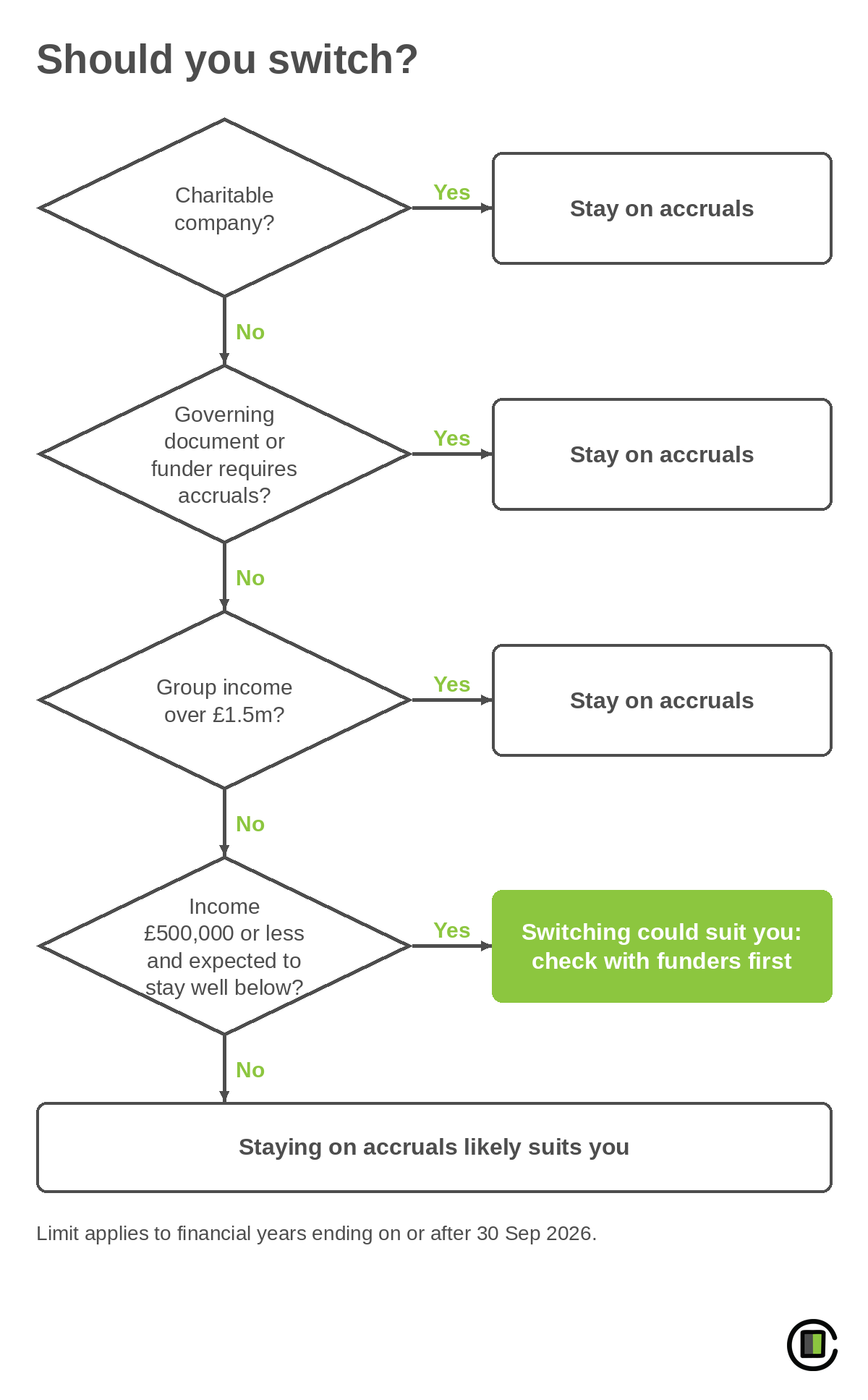
Step 2: Confirm your income is £500,000 or less
If you currently prepare accruals accounts, gross income is the total income in your SoFA for all funds, excluding endowment funds received. Include any expendable endowment transferred to income funds in the year and now available to spend.
Our receipts and payments vs accruals guide covers the detail.
Our charity accounts type checker gives a quick answer for your charity.
Step 3: What you gain
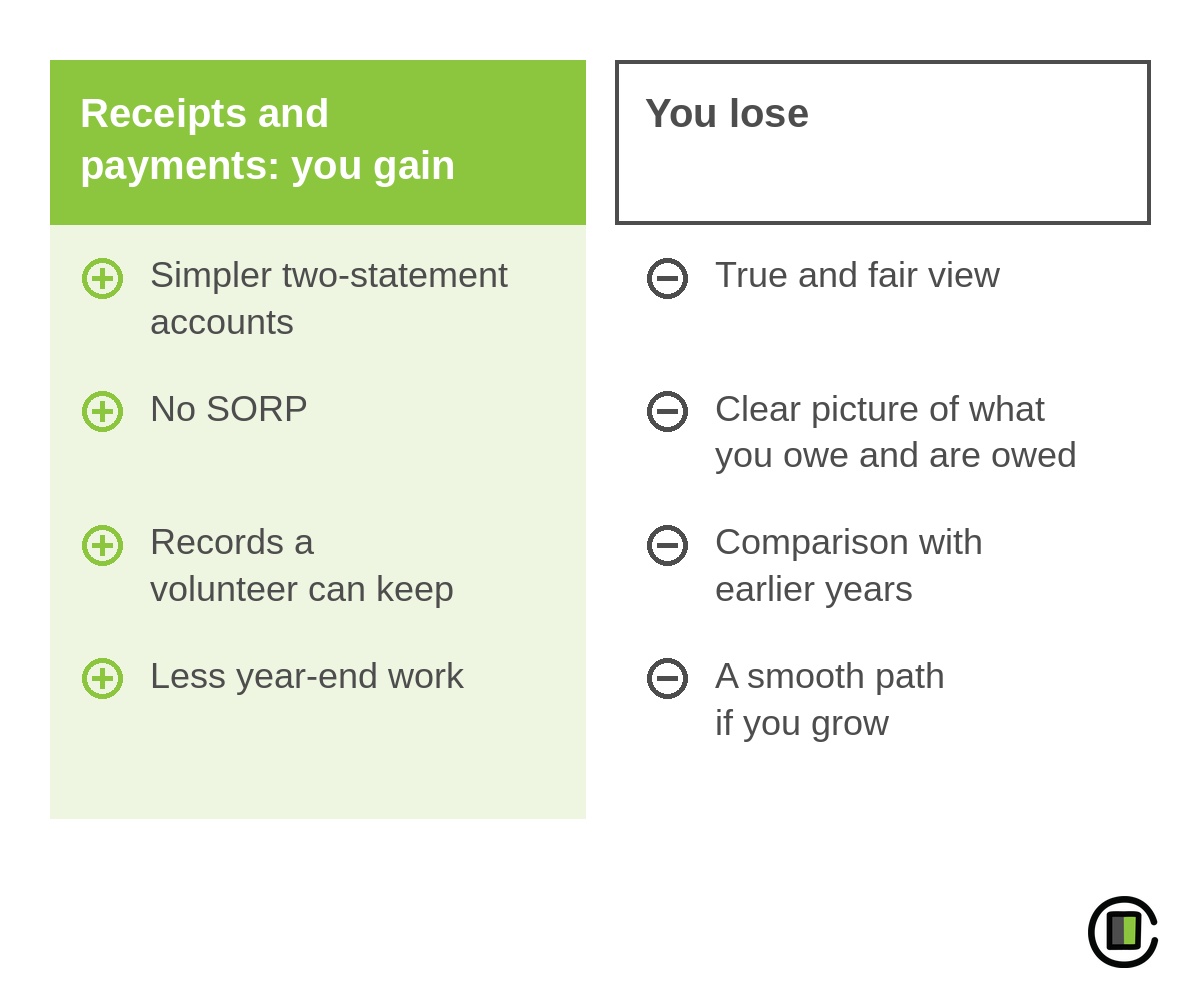
Simpler accounts. Two statements replace the SoFA, balance sheet and notes: a statement of receipts and payments, and a statement of assets and liabilities. CIOs also add notes on guarantees given and debts secured on their assets.
No SORP. The Charities SORP applies to accruals accounts only. Switching takes you out of SORP 2026, which applies to accounting years starting on or after 1 January 2026. Our SORP 2026 article explains what changed.
Records a volunteer can keep. The accounts follow the bank. A treasurer with tidy bank records can often prepare them.
Less year-end work. No year-end adjustments for amounts owed, or for income and costs that span two periods.
Step 4: What you lose
A true and fair view. Accruals accounts record income when the charity is entitled to it and spending when it is incurred. Receipts and payments accounts record cash movements only. A multi-year grant received in March can make one year look rich and the next look short.
A full picture of what you owe and are owed. Unpaid bills, grants due and money held for future work are not reflected in the receipts and payments figures, though debts and amounts owed appear in the statement of assets and liabilities.
Comparison with earlier years. Your trustees and funders know your accruals figures. A switch breaks the line between this year and last.
A smooth path if you grow. Cross £500,000 and you return to accruals accounts. Each switch costs time and fees, and moving back can mean rebuilding year-end figures, such as amounts owed and prepaid, that you stopped tracking.
Step 5: Decide
A switch often makes sense if your charity:
deals mainly in cash and bank transactions
has few bills or grants outstanding at the year end
expects income to stay well below £500,000
has funders who are content with cash-based reporting.
Staying on accruals often makes sense if your charity:
receives multi-year grants or income for future periods
owns buildings or equipment, or holds investments
reports to funders who expect a fuller picture
sits close to £500,000 and expects to grow.
Before you switch, ask your main funders whether receipts and payments accounts meet their reporting needs. Tell your examiner or auditor early. Plan the change from the start of a financial year so your records match the new format from day one.
What does not change
Scrutiny. The type of accounts does not decide whether you need an independent examination or audit. That depends on income and assets, and on your governing document or funding agreements. Charitable companies may also need an audit under the Companies Act 2006. For financial years ending on or after 30 September 2026, accounts need an independent examination if income is over £40,000, and the examiner must be professionally qualified if income is over £500,000.
Filing. Charities with income over £25,000 still send their trustees' annual report and accounts to the Commission. CIOs send them whatever their income, and all charities with income over £10,000 complete an annual return.
How Codec Accounting can help
We cover all areas of accounting, with deeper experience in charity finance. We can:
Check your governing document and grant agreements for accruals requirements.
Model how your figures would look under each type before you commit.
Prepare receipts and payments accounts or SORP 2026 accruals accounts.
Handle the switch either way, including the opening figures.
Choose the type of accounts your charity will still be happy with in three years.
Book a meeting, call 0203 143 2772 or contact us to talk it through.
This article is general guidance, not advice for your specific situation. Requirements change, so check current guidance on GOV.UK.